Click for details.
{dev.talk} - The One Where We Are All a Bit Rusty After the Holidays
Hi there,
This event explores real-world architectural lessons of building a commercial-grade Rust system on constrained hardware, followed by a look at why most AI systems are failing, and how you can build one that won't.
Thank you for being part of our amazing community of software engineers and tech enthusiasts.
Quick Reminder: Organising these events takes a lot of time and effort from our dedicated volunteers. If your plans change and you can't make it, please cancel your ticket via the ticketing app or drop us an email at contactus@devdottalk.uk. This helps us manage the event better and allows others to attend.
Event Details
Date: Wednesday, 16th September 2026
Time:
- Doors open: 6:50 PM
- Event starts: 7:00 PM
- Event ends: 9:00 PM
Location: Bournemouth University, Talbot Campus
Venue
🏢 Room K101, Kimmeridge House
Bournemouth University, Talbot Campus, Fern Barrow, Poole, Dorset, BH12 5BB
Maps & Directions
- 🅿️ If driving, head to the visitors car park: Parking Location (Parking marked with a P pin on the campus map below)
- 🎥 Watch the video showing how to get from the car park to Kimmeridge house: Car park to Kimmeridge house Video
- 📍 Navigate to Kimmeridge House entrance: Google Maps pin for Room K101 or what3words (Kimmeridge House marked with a KH pin on campus map below)
- More directions on the BU website & official Talbot Campus map
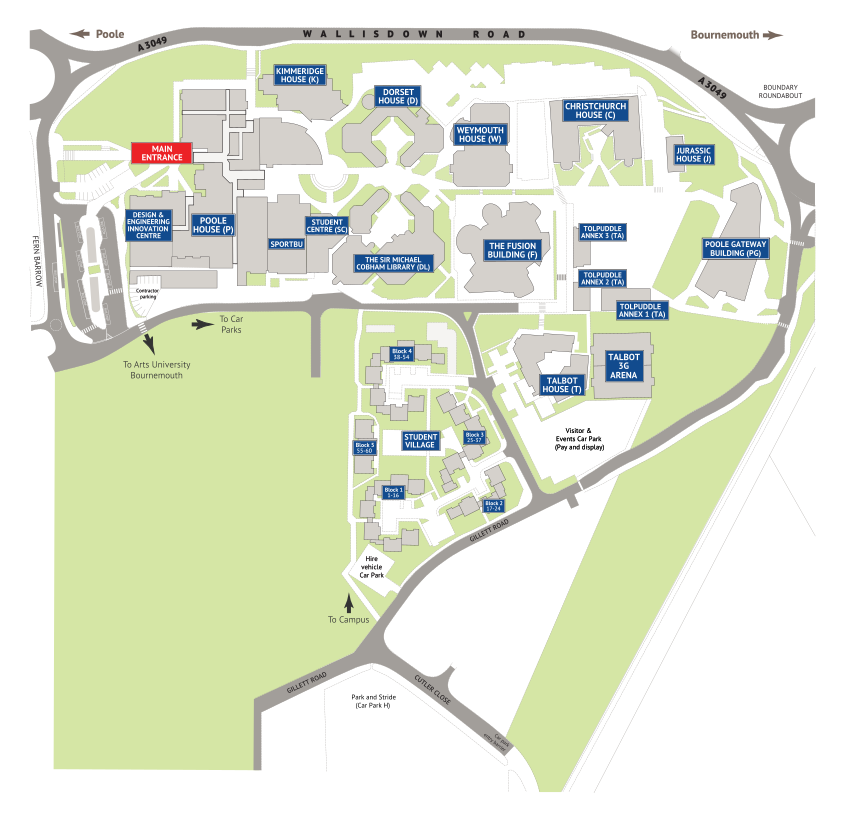
Building Entrance: Kimmeridge House has one entrance, accessed via the courtyard in the middle of campus (CY pin on Campus map). The room is on the first floor - take the stairs or lift, then turn left from the stairs or right from the lift.
Accessibility: Flat entrance at ground level with lift access to the first floor.
Travel Options
- Bus: Drops off at the main entrance on Fern Barrow (BS pin on the campus map above)
- Train: Nearest station is Bournemouth Station (~45 min walk). Taxi or bus from station takes 15 mins.
- Bike: Bike racks available on campus.
- Parking: Free during the event. Check signage when parking: Google Maps location
Lineup
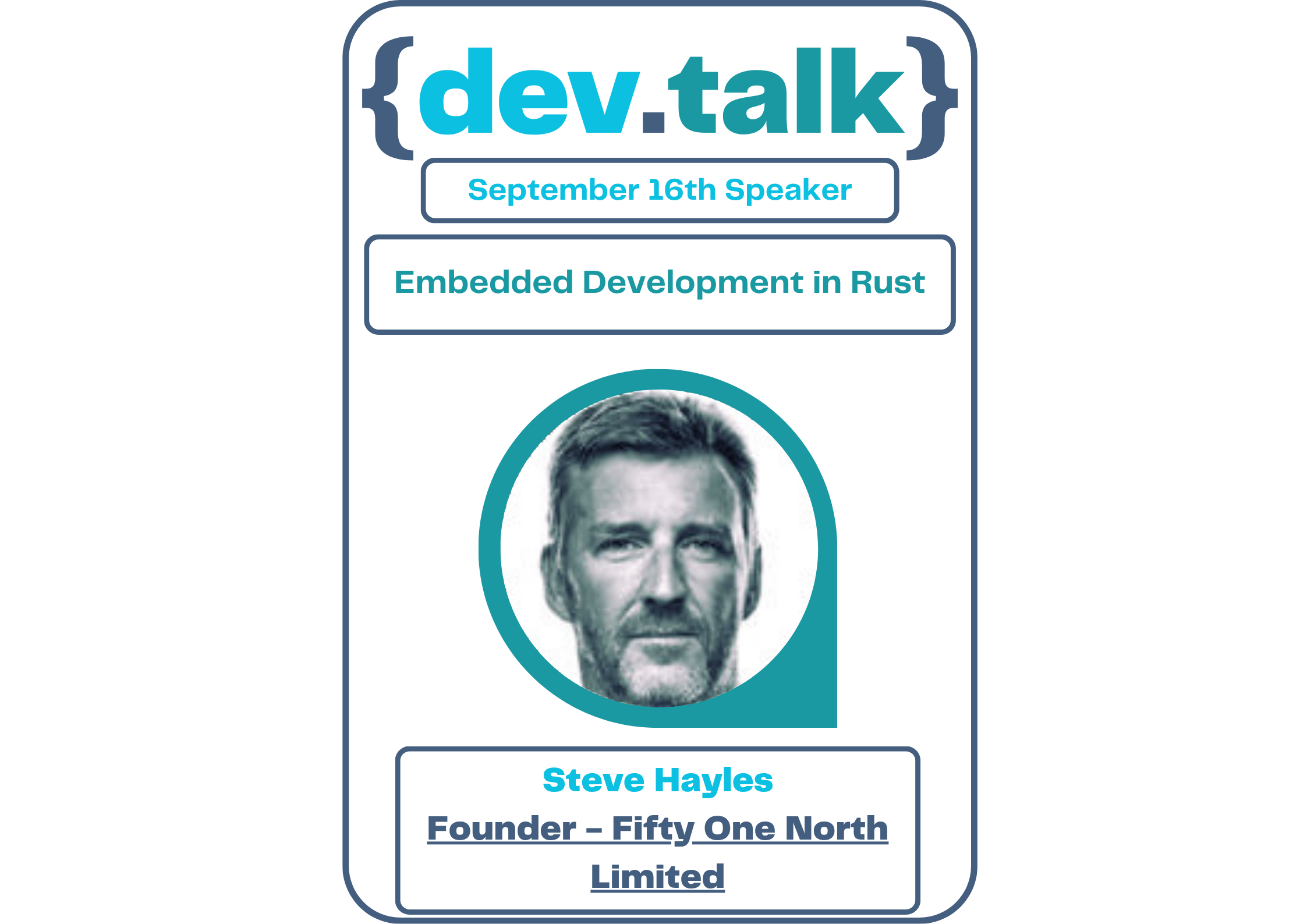
Embedded Development in Rust
What does it take to build a real, commercial-grade embedded system in Rust—on a $5 microcontroller? In this talk, I’ll walk through the development of Bluefin, an ESP32-based marine instrument processor designed for real-world yacht racing. This isn’t a toy project or a blinking LED demo—it's a performance-focused, network-connected system handling real-time sensor data, onboard analytics, and a modern web-based UI. We’ll explore what actually happens when you push the ESP32 to its limits: Running async networking and web servers on constrained hardware Dealing with Wi-Fi throughput bottlenecks and lwIP quirks Managing memory, flash, and PSRAM under real pressure Building a responsive frontend served directly from the device Integrating BLE, provisioning, and streaming telemetry Along the way, I’ll share the hard-earned lessons—the things that break, the things that don’t behave like the docs suggest, and the architectural decisions that made the system viable. A key focus will be why Rust makes this possible: Strong guarantees around memory safety in a highly concurrent environment Fearless concurrency for async execution on embedded systems Performance characteristics comparable to C/C++ without the same class of bugs Building maintainable, scalable embedded software—not just firmware This talk is aimed at developers across the spectrum—whether you're into embedded systems, backend services, or modern web development. If you’ve ever wondered whether Rust is ready for serious embedded work—or how far you can push a microcontroller—this session will give you a grounded, real-world answer.
Steve Hayles Bio
Steve is a professional sailor who's spent years racing at a high level, and a long-time tech enthusiast. When he's not on the water, he enjoys building things—both in software and hardware—usually involving embedded systems and pushing them a bit further than they probably should go.
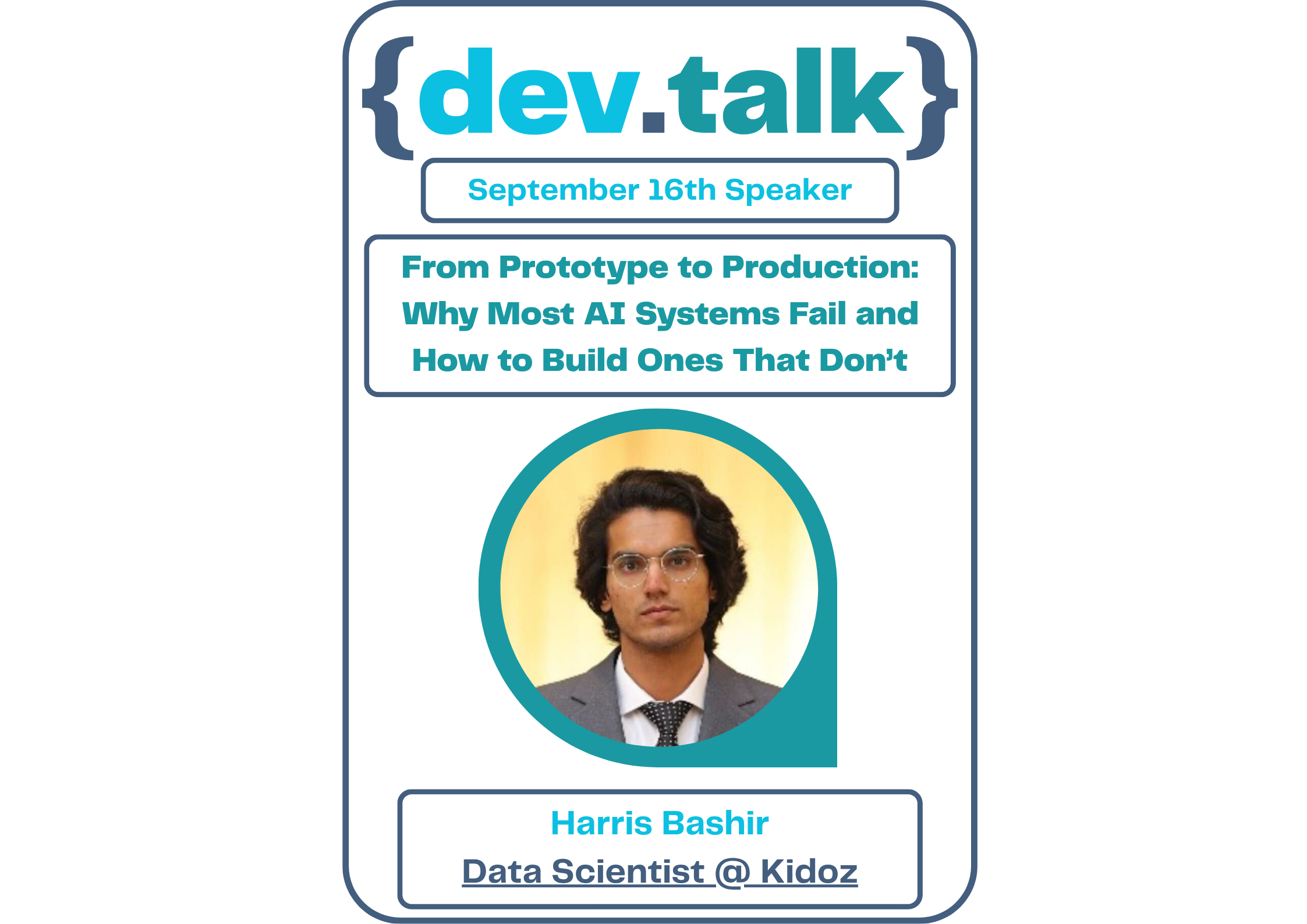
From Prototype to Production: Why Most AI Systems Fail and How to Build Ones That Don’t
AI and machine learning have moved rapidly from experimentation into real-world deployment, yet a large percentage of projects still fail when transitioning from prototype to production.
This session explores the critical gap between building a working model and operating a reliable AI system at scale. Drawing from hands-on experience across mobile applications, data pipelines, and applied machine learning systems with measurable commercial impact, this talk focuses on the engineering challenges that are often overlooked.
Key areas covered include:
Designing robust data pipelines and handling data drift in production Moving from notebooks to scalable, production-grade services Monitoring performance, cost, and reliability of deployed models Trade-offs between model complexity and system stability Governance, explainability, and managing risk in real-world AI systems
Attendees will gain a practical understanding of what it takes to build AI systems that are not only accurate, but reliable, maintainable, and capable of delivering consistent business value.
This session is designed for data scientists, engineers, and technical leaders who want to move beyond experimentation and build production-ready AI systems.
Harris Bashir Bio
Harris Bashir is a Full-Stack Data Engineer and Applied AI Engineer specialising in building and deploying production-grade AI systems across LLMs, computer vision, and reinforcement learning. He has worked on large-scale platforms at companies including Amazon and Kidoz, and currently focuses on developing AI governance, monitoring, and optimisation tools for SMEs. Harris holds an MSc in Computer Science with Distinction and has led and delivered multiple real-world AI products used in commercial environments. He is passionate about bridging the gap between research prototypes and reliable, scalable systems in production.
What to Expect
We'll have soft drinks and some snacks available to keep you refreshed throughout the evening. If you have any dietary restrictions or allergen concerns, please let our organisers know.
Upon arrival, we'll check your ticket and provide you with a name badge. This is a great opportunity to network with fellow attendees, so don't be shy, introduce yourself.
The night will consist of some software focussed talks (normally 2) interspersed with networking opportunities.
For more on the event format, see our Attending page and FAQs.
Important Notes
Photography & Recording: Please note that the event will be recorded and photographed. If you prefer not to be included in any photos or videos, kindly inform the camera operator. These materials will be used to promote future events and shared on platforms like YouTube.
We Can't Wait to See You
Thank you for being part of {dev.talk}. We're excited to connect, learn, and grow together as a community. See you soon!
Warm regards,
The {dev.talk} Team