{dev.talk} - The One Where We Ask, "Could This Be Any More Useful?"
Hi there,
Join us for an evening about turning good technology and strategy into outcomes that work for real people. Explore how making user needs visible can improve alignment, team design, and flow, then hear candid lessons from putting AI products in front of diverse users. Come for practical ideas on building technology that teams can organise around and people can genuinely understand, trust, and use.
Thank you for being part of our amazing community of software engineers and tech enthusiasts.
Quick Reminder: Organising these events takes a lot of time and effort from our dedicated volunteers. If your plans change and you can't make it, please cancel your ticket via the ticketing app or drop us an email at contactus@devdottalk.uk. This helps us manage the event better and allows others to attend.
📍 Venue Details Coming Soon!
We'll reveal the exact location on campus a few days before the event. If you get a ticket, you will be notified of the location on the day, as well as links to maps too. This helps us to manage capacity more effectively.
Event Details
Date: Wednesday, 21st October 2026
Time:
- Doors open: 6:50 PM
- Event starts: 7:00 PM
- Event ends: 9:00 PM
Location: Bournemouth University, Talbot Campus
Lineup
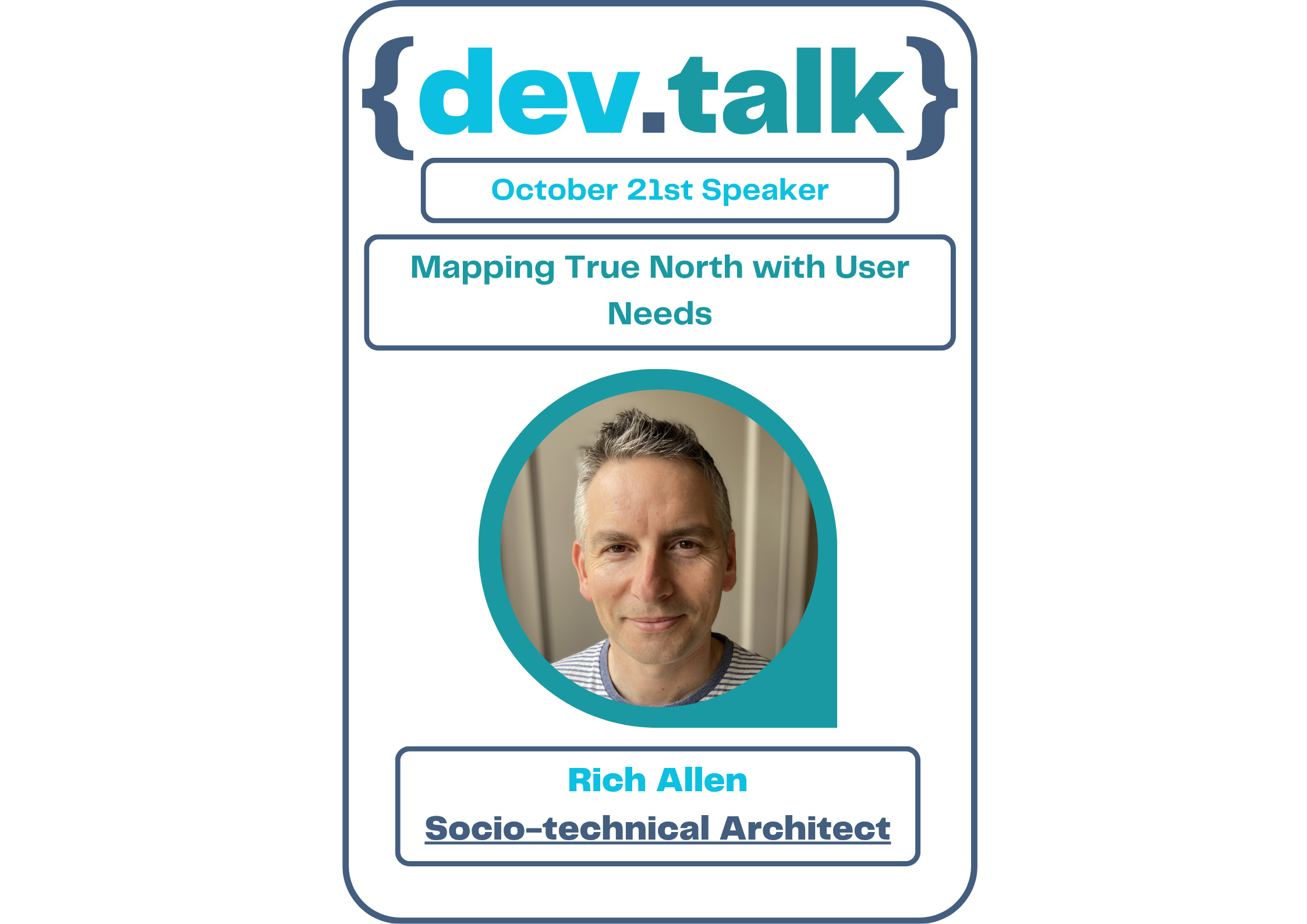
Mapping True North with User Needs
Many organizations pursue better outcomes, yet struggle with misalignment, slow delivery, and growing coordination overhead. Strategy exists, teams work hard, but the connection between the two often feels unclear.
In this talk, Rich explores why user needs are the missing anchor between strategy and teams. When user needs remain implicit, outcomes become fuzzy and alignment becomes effortful. When made visible, they can guide clearer priorities, safer autonomy, and more effective team interactions.
Using real examples and a practical case study, Rich introduces User Needs Mapping, a collaborative visual technique for uncovering dependencies, reducing cognitive load, and designing for better flow.
Attendees will leave with a fresh perspective on alignment, outcomes, and how to organise around what truly matters.
Key takeaways:
Understand why outcomes often feel disconnected from day-to-day work: Learn why many organisations jump from strategy to initiatives without a clear translation layer rooted in real user needs.
Reframe alignment as a structural challenge, not just a communication problem: See how unclear ownership, tight coupling, and coordination overhead create friction even in capable teams.
Learn how user needs can act as a north star for decision-making: Understand how explicit user needs create clearer priorities, safer autonomy, and stronger local decision-making.
Discover a practical visual technique for improving flow: See how User Needs Mapping helps leaders and teams reveal dependencies, assess cognitive load, and explore more coherent team boundaries.
Leave with a new question for your own organisation: What would change if user needs truly shaped how we organise, fund, prioritise, and measure work?
Rich Allen Bio
Rich Allen is a sociotechnical architect and independent consultant who helps organizations achieve sustainable fast flow by optimizing team design, reducing cognitive load, and aligning around user needs.
With over two decades of hands-on experience as a developer, tech lead, architect, and CTO, Rich brings a deep technical foundation to his work at the intersection of software delivery and organizational design. As one of the longest-serving Team Topologies Valued Practitioners (https: //teamtopologies.com/all-ttvp/rich-allen-ttvp), Rich has supported a wide range of organizations in applying Team Topologies patterns and principles in real-world contexts.
He is the author of the book User Needs Mapping: Aligning Teams Around What Matters and the creator of several widely used tools and practices, including the Fast Flow Toolkit, Flow Decision Records, and User Needs Mapping.
Rich co-founded the Developer South Coast technology user group and holds a BEng in Microelectronics and Computing from Bournemouth University.
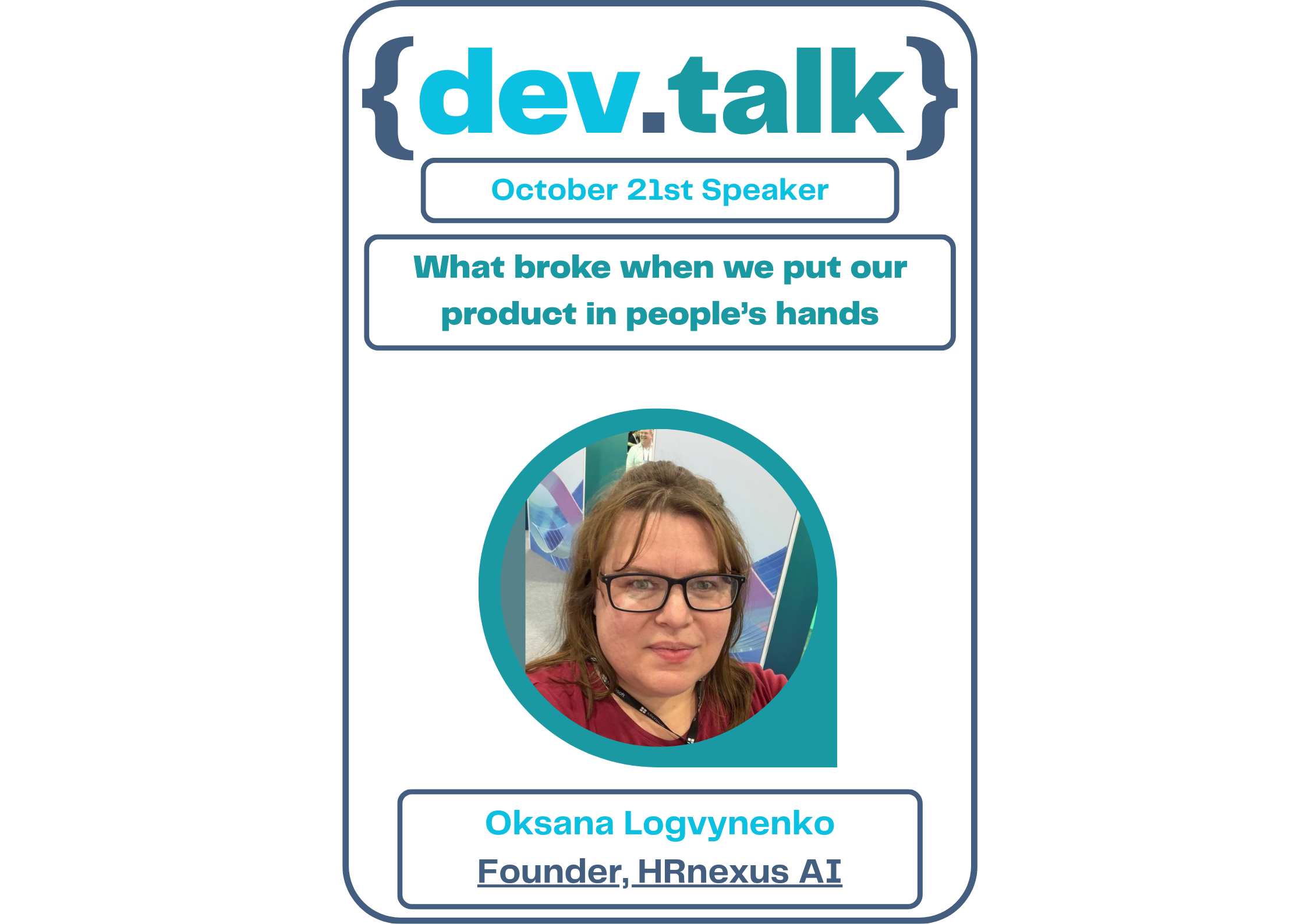
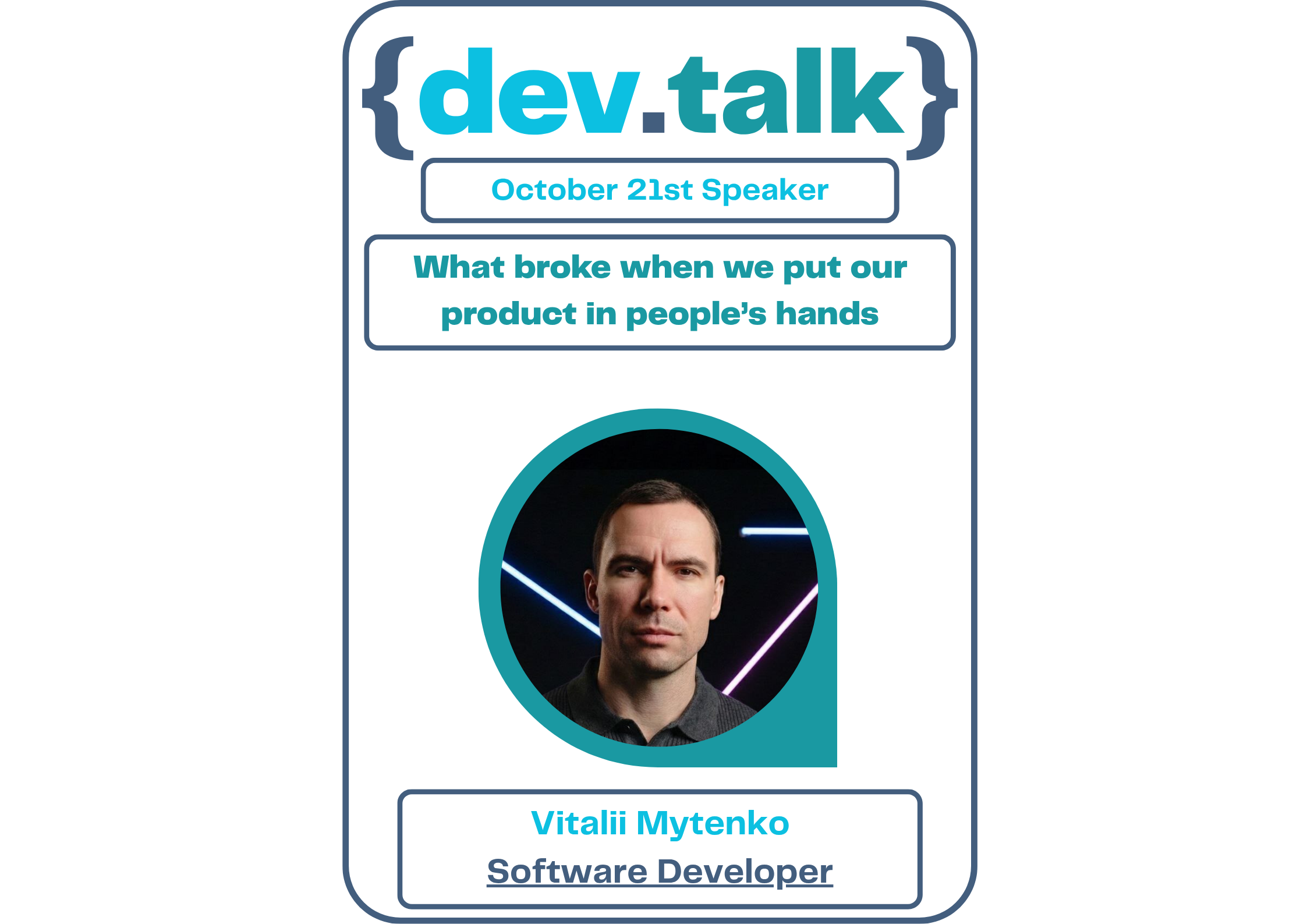
What broke when we put our product in people’s hands
The easy bit was building our AI prototype.
It’s another matter getting real people to actually start using it which is why for over a year now I have been working on and testing my AI tools with some pretty unusual users, by traditional product-testing standards at least.
People whose level of English, digital skillsets, culture and understanding of AI all differ dramatically from one another.
In today’s session, I’m going to tell you what happened when our prototypes weren’t just prototypes anymore, but instead sat in front of actual users.
There were some surprises where everything went great… And there were lots more where nothing went great. Prompts that were obvious to us were confusing to everyone else. Technically correct AI answers that couldn’t help anyone in real life. Translation didn’t magically solve every language problem. And some folks had way too much faith in AI, others had zero.
Come to this session if you want to hear some real-world experiences of how we developed our tools and programmes Newcomer Navigator, EduHub and our AI-supported employability work in Somerset.
But this is NOT going to be about how to create the smartest AI model. It will focus on what comes next once your techy thing actually works technically.
How did things break down as real users started using our product.
What needed to change and which of my, and others’, assumptions were incorrect?
Could I have fixed more earlier on by involving real users earlier?
In this talk, I'll discuss all these questions about our journey from what failed, to what was changed, to what surprised us – so that anyone building an AI product for real users can take something useful away from it.
Oksana Logvynenko Bio
Oksana Logvynenko is the founder of HRnexus AI and CulturaLinks Community CIC. She builds practical AI tools and learning products designed for people who are often overlooked in mainstream technology design.
Her work includes EduHub, an AI-supported learning platform, and the Newcomer Navigator, a multilingual AI tool designed to help people understand practical information about work, housing and everyday life.
She has also designed and delivered AI and digital skills programmes reaching hundreds of people, and has trained educators across Somerset to use AI safely and practically.
Her work focuses on the gap between an AI prototype that works technically and a product that people can actually understand, trust and use.
She brings together AI product development, user testing, education and real-world adoption, with a particular interest in multilingual users, digital confidence and inclusive AI design.
Vitalii Mytenko Bio
Small retail business owner. Python web developer. AI software engineer.
What to Expect
We'll have soft drinks and some snacks available to keep you refreshed throughout the evening. If you have any dietary restrictions or allergen concerns, please let our organisers know.
Upon arrival, we'll check your ticket and provide you with a name badge. This is a great opportunity to network with fellow attendees, so don't be shy, introduce yourself.
The night will consist of some software focussed talks (normally 2) interspersed with networking opportunities.
For more on the event format, see our Attending page and FAQs.
Important Notes
Photography & Recording: Please note that the event will be recorded and photographed. If you prefer not to be included in any photos or videos, kindly inform the camera operator. These materials will be used to promote future events and shared on platforms like YouTube.
We Can't Wait to See You
Thank you for being part of {dev.talk}. We're excited to connect, learn, and grow together as a community. See you soon!
Warm regards,
The {dev.talk} Team